

July 15, 2026
Foundation cracks can be alarming, but not every crack points to the same problem. Knowing the difference between vertical and horizontal foundation cracks can help you understand what may be happening beneath your home and when it's time to call in a professional.
If you've noticed foundation cracks in your Columbus, OH home, here's what you should know.
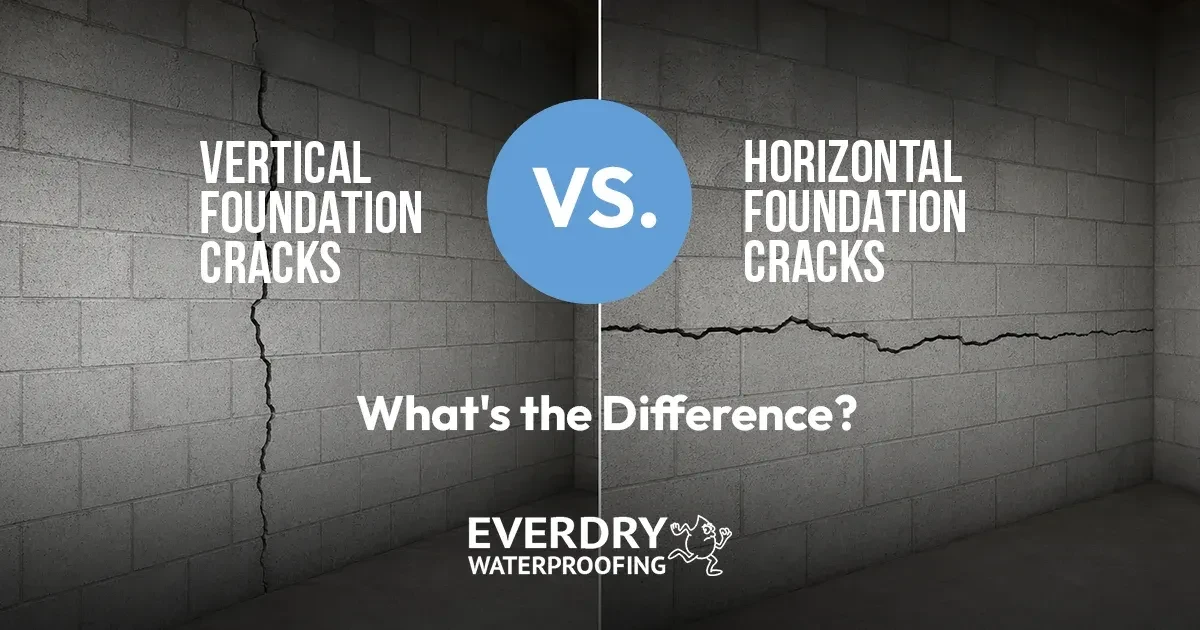
What's the Difference Between Vertical and Horizontal Foundation Cracks?
While both types of foundation cracks deserve attention, they often have different causes, levels of severity, and repair methods. Understanding these key differences can help you make informed decisions about protecting your home.
1. The Direction of the Crack
The most obvious difference is the direction the crack runs. Vertical foundation cracks run up and down or at a slight angle, while horizontal cracks extend across the wall from side to side. The direction of the crack can give valuable clues about what's causing the damage.
2. What Causes Them
Vertical cracks are often the result of normal settling as a home's foundation adjusts over time. In many cases, small vertical cracks are expected as concrete cures and settles. Horizontal foundation cracks, however, are more commonly caused by pressure from expanding soil or excess water pushing against the foundation walls. These conditions can place significant stress on your home's structure.
3. The Level of Concern
Not every vertical crack is a serious structural issue, especially if it's small and not changing over time. Horizontal cracks are generally considered more concerning because they can indicate that foundation walls are beginning to bow or weaken under pressure. Even so, any foundation crack should be inspected to determine its cause and whether repairs are needed.
4. How They Can Affect Your Home
Both vertical and horizontal cracks can allow water to enter your basement or crawl space, increasing the risk of moisture problems, mold growth, and water damage. Horizontal cracks may also affect the structural stability of your foundation if left untreated. Addressing cracks early can help prevent more extensive and costly repairs down the road.
5. How They're Repaired
The right repair method depends on the type of crack, its size, and what's causing it. Smaller vertical cracks may be sealed to help prevent water intrusion, while larger cracks or those caused by settling may require additional foundation repair solutions. Horizontal cracks often require structural reinforcement to relieve pressure and stabilize the wall. A professional inspection is the best way to determine the right approach for your home.
When to Schedule a Professional Inspection
It's always a good idea to have foundation cracks evaluated, even if they seem minor. A professional inspection can identify whether a crack is cosmetic or a sign of a larger foundation issue. Catching problems early can help protect your home's value and prevent repairs from becoming more expensive over time.
Protect Your Columbus Home With a Free Foundation Inspection
Whether you've noticed a small vertical crack or a large horizontal crack, it's important not to ignore the warning signs. Our team at Everdry Waterproofing of Columbus can identify the cause of foundation cracks and recommend the right solution to keep your home safe, dry, and stable.
Contact us today to schedule your free basement inspection and learn how we can help protect your foundation for years to come.
